Travel
Las Vegas After Dark: A Cinematic Travel Essay
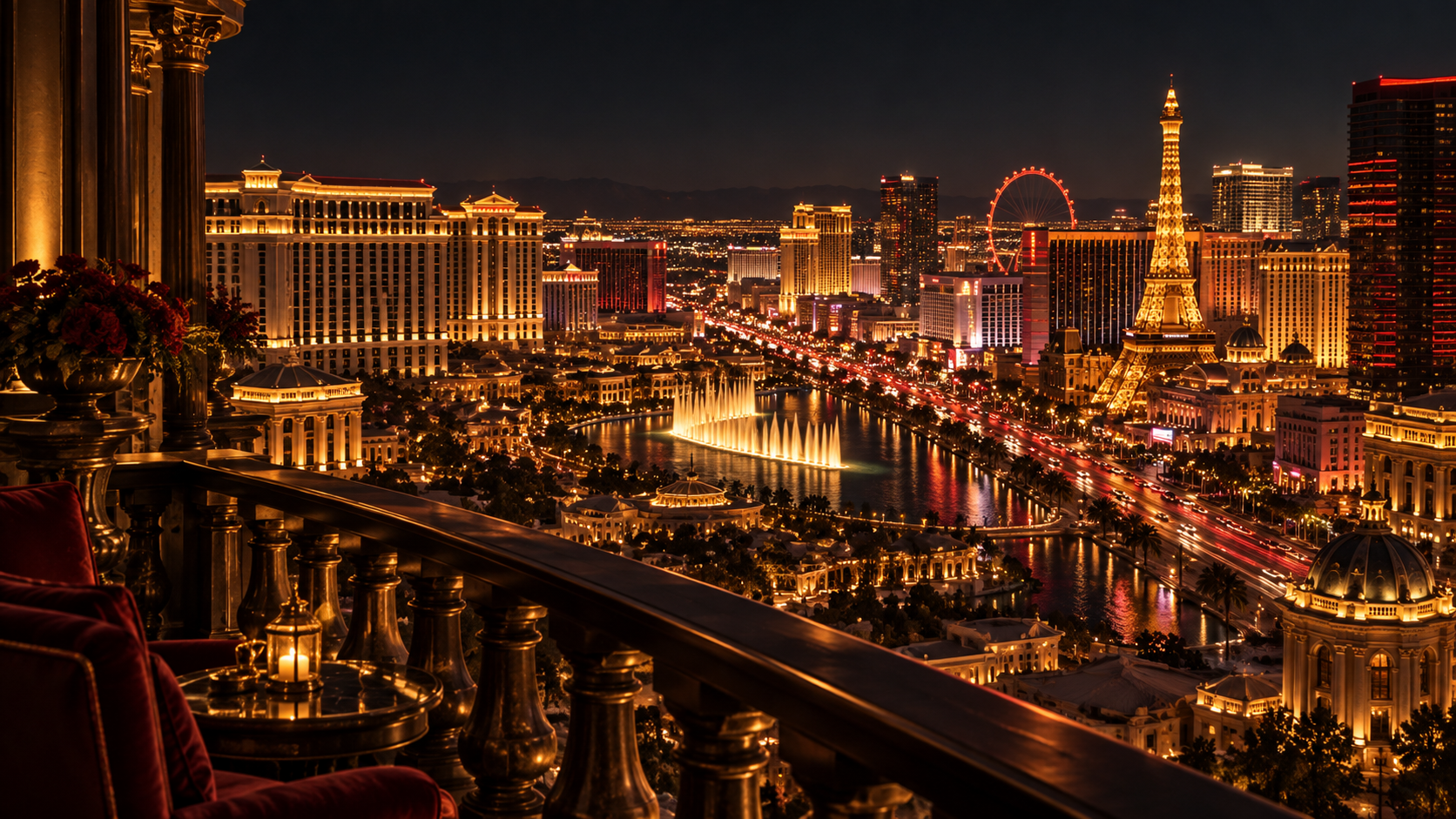
Las Vegas changes character after sunset. In daylight, the city exposes distance, scale and desert edges. At night, light redraws the map and turns the skyline into a sequence of entrances.
The hotel as a film set
A great hotel controls the transition between public spectacle and private retreat. The arrival may be monumental, but the most memorable moments are often quieter: an elevator opening onto a dim corridor, a table prepared beside a window or the city reflected in dark glass.
These spaces feel cinematic because they guide attention. Architecture frames the view, lighting creates rhythm and every threshold suggests that the next room belongs to a different scene.
In Las Vegas, checking into a hotel can feel less like entering a building and more like accepting a role.
A city built on transitions
The Strip is best experienced through movement. From a balcony it becomes a broad composition of gold, red and white. At street level it fragments into music, traffic, reflections and passing conversations.
The contrast is essential. Grandeur makes the intimate details sharper; noise makes a quiet lounge feel more private. The city continually cuts between wide shot and close-up.
Travel as observation
A cinematic journey is not a checklist of attractions. It is an exercise in noticing. The color of a lobby at midnight, the choreography of a dining room and the moment the desert air returns after hours indoors can say more than a list of superlatives.
For Jackie Casino, travel is a way to study character. Las Vegas offers an unusually concentrated lesson: everyone arrives with an expectation, and the city reveals how quickly that expectation can change.